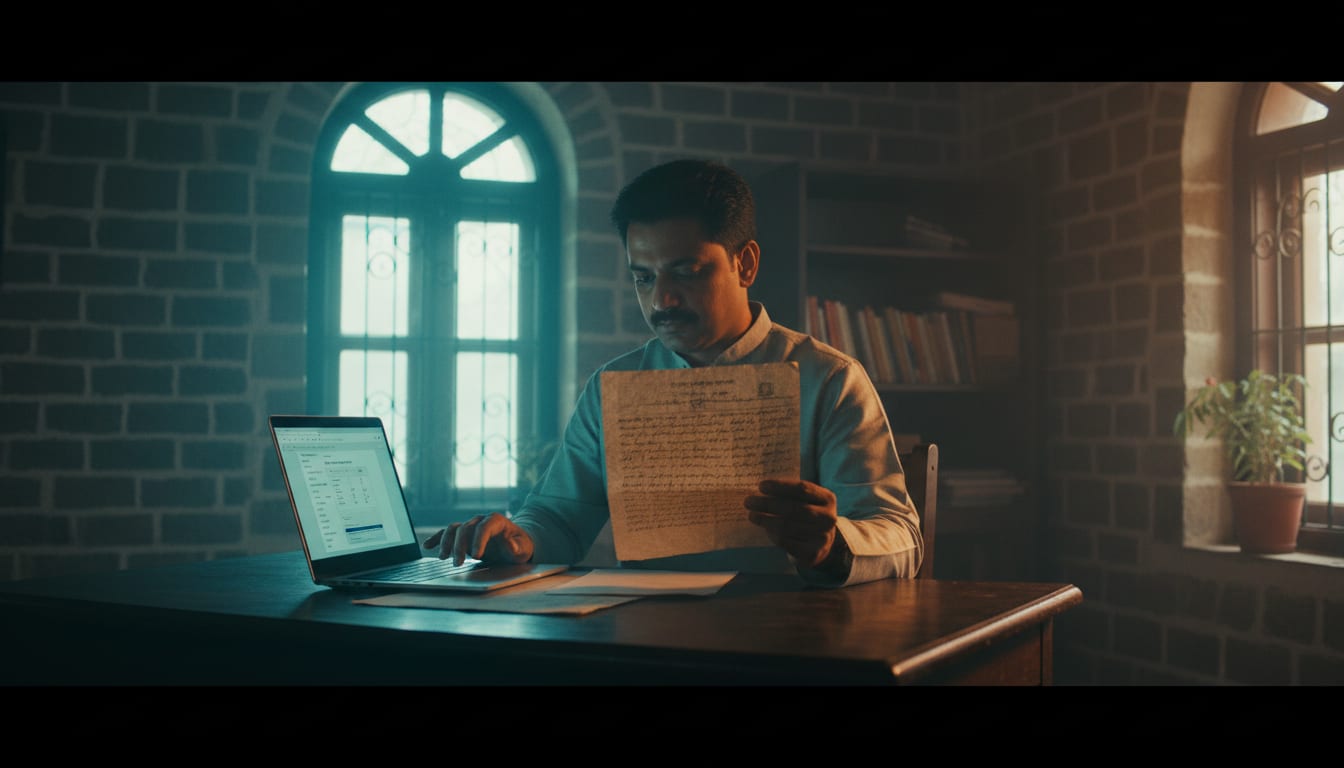
A young IT couple sat across my desk last Friday evening with a certified bank cheque for ₹10 lakhs. They were ready to pay the booking advance the next morning. Their dilemma was one I hear weekly in Cuttack: should they buy a ready-to-move ₹65 lakh flat in CDA Sector 11, or a ₹45 lakh raw plot in Trisulia? The flat promised immediate rental income and security. The land promised generational wealth and a 12 percent annual appreciation rate. Here is what I tell every client who walks into my office with this exact question. The financial models and return-on-investment calculators are useless if the underlying title is defective. In Odisha, the legal risks between buying an apartment and buying raw earth are completely different species of problems. A flat buyer worries about builder delays and undivided share calculations. A land buyer is stepping into a century-old web of revenue records, settlement mismatches, and boundary disputes. Let me share something that could save you lakhs. The decision for 2025 is not just about which asset grows faster. It is about which asset you can legally defend when a stranger shows up with a 1980s handwritten document claiming they own half your living room.
The RERA Shield Versus Raw Plot Reality
When You Buy An Apartment In A Registered Project
When you buy an apartment in a registered project today, you are purchasing under the protective umbrella of the Real Estate Regulation and Development Act, 2016. Section 8 of the RERA Act places strict obligations on the builder regarding title guarantees and project completion. The developer has already aggregated the land, converted its use from agricultural to homestead, and secured approvals from the Cuttack Development Authority or the local municipality. The legal heavy lifting of land conversion is already done. If the builder's title is defective, RERA provides a structured grievance redressal mechanism. You are buying a finished product with a relatively clear chain of custody. Raw land is entirely different. The principle of caveat emptor applies completely. Let the buyer beware. When you purchase a plot in the expanding outskirts of Cuttack or Bhubaneswar, nobody has sanitized the title for you. You are directly inheriting every legal mistake, every unpaid revenue tax, and every family dispute of the previous owners dating back to the 1930s settlement. There is no RERA authority to complain to if you discover a title flaw after registration (IGR Odisha (Inspector General of Registration)). Your only recourse is a civil lawsuit that could take twenty years to resolve in the district courts.
The ₹45 Lakh Trisulia Boundary Trap
Before we look at the appreciation numbers, let us understand what actual risk looks like. Last year, a client purchased a beautiful 2000 square foot plot near Trisulia for ₹45 lakhs. The seller provided a registered sale deed from 2015 and a clean encumbrance certificate showing no current loans. The buyer paid the money, registered the new deed at the Sub-Registrar office, and thought the transaction was complete (IGR Odisha SRO directory). Six months later, when my client applied for mutation to get the Bhulekh Odisha portal records updated in his name, the Tahasildar rejected the application (Bhulekh Odisha portal). The reason was buried in the fine print. The seller had indeed bought the land in 2015, but he had never completed his own mutation process. More importantly, the original 2015 boundaries overlapped with a designated government water channel by just three feet. Under the Odisha Prevention of Land Encroachment Act, the entire transaction was frozen. My client lost ₹45 lakhs because he trusted a previous sale deed without verifying the actual ground map against the revenue records. The risk is real. Verify before you sign.
Now let us look at how the financial realities actually stack up when the title is clean.
Appreciation Math for Cuttack in 2025
The Financial Argument For Land Is Powerful Provided You
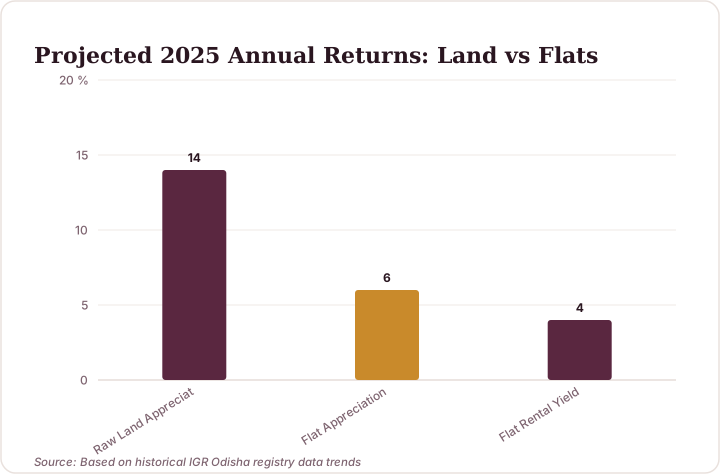
The financial argument for land is powerful, provided you secure the title. Historical data from the Inspector General of Registration (IGR Odisha) shows that non-agricultural land in the Cuttack-Bhubaneswar corridor has appreciated at a compound annual growth rate of 12 to 15 percent over the last decade. A ₹30 lakh plot bought in 2015 is often trading near ₹90 lakhs today. Flats tell a different story. The appreciation on apartments in established areas like CDA or Nayapalli hovers between 5 and 7 percent annually. Why the massive gap? Because a flat is a depreciating physical structure sitting on an appreciating piece of land. As the building ages, maintenance costs rise, sinking funds deplete, and newer projects with better amenities draw the premium buyers away. However, flat investments generate immediate yield. A ₹65 lakh apartment can yield ₹18,000 to ₹25,000 monthly in rent. Raw land generates zero yield and actually costs you money in annual boundary maintenance, security monitoring, and property taxes. If your investment horizon is under five years, the rental yield of a flat often beats the illiquid appreciation of raw land. If your horizon is fifteen years, secure land wins every time.
Sabik vs Hal Records in Land Purchases
If you decide to pursue the higher returns of land, you must master the vocabulary of Odisha revenue law. The single biggest trap for land investors in 2025 is the mismatch between historical and current records. During title verification, we examine two eras of documentation. The Sabik settlement refers to the older land records, typically finalized between the 1930s and 1960s depending on the district. The Hal settlement refers to the current, modernized records finalized in the 1980s and 1990s. Fraudsters frequently exploit the confusion between these two systems. They might show you a Sabik record proving their grandfather owned a massive 5-acre parcel, conveniently hiding the fact that during the Hal settlement, the government acquired 2 acres of it for a highway expansion. If you buy based on the Sabik records without cross-referencing the Hal Record of Rights, you are buying phantom land. Section 17 of the Registration Act, 1908 mandates the registration of the sale, but the Sub-Registrar does not verify if the seller actually owns the dimensions claimed. That is entirely your responsibility.
This historical record mismatch is why I insist every buyer traces the chain of title back at least thirty years, crossing the boundary from Hal back into Sabik records to ensure continuity.
Undivided Share and Flat Ownership Risks
Do Not Assume Flats Are Entirely Risk-Free Just Because
Do not assume flats are entirely risk-free just because they have RERA approval. The most critical legal concept in apartment investing is the Undivided Share of Land (UDS). When you buy a flat, you are buying a concrete box in the sky, plus a mathematical percentage of the earth beneath the building. If a developer builds 100 identical flats on a 10,000 square foot plot, your UDS is 100 square feet. Here is the 2025 reality check. Buildings have a structural lifespan of about 60 to 70 years. When that Cuttack apartment block eventually requires demolition and redevelopment, your only actual asset is that 100 square feet of UDS. I have seen developer agreements where the builder maliciously retained a large portion of the UDS for themselves, drastically reducing the future redevelopment value for the flat owners. Always verify the UDS calculation in your builder agreement against the total project land area registered at the Sub-Registrar office.
The 45-Day Mutation Rule for Land Buyers
Think Of Mutation Like Updating The Nameplate On A
Think of mutation like updating the nameplate on a house after you buy it. Registration under the Registration Act makes you the legal owner of the deed, but mutation makes you the recognized owner in the government revenue records. Section 36 of the Odisha Land Reforms Act, 1960 governs the protection of certain land rights, while the Odisha Survey and Settlement Rules dictate the mutation process. Legally, a mutation application should be processed within 45 days. In the real world of 2025, a Form 6 application at a busy Tahasil office like Cuttack Sadar can take 90 to 120 days. During this gap, the Bhulekh portal still shows the seller's name. This is the danger window. A malicious seller can use this delay to apply for a duplicate encumbrance certificate and attempt to mortgage the same land to a private moneylender before your name appears in the revenue system. You must track your mutation status weekly and file a grievance with the District Collector if the Tahasildar delays beyond 60 days.
Three Essential Checks Before Paying Advances
The solution is simpler than you think, provided you follow a strict sequence before handing over any token advance. Never let a broker rush you with claims of other pending buyers. 1. Demand the 30-Year Encumbrance Certificate: Do not accept a 12-year EC. Request Form 25 from the Sub-Registrar covering the last 30 years to expose older, unresolved mortgages or family partition suits. 2. Verify the Hal Patta Online: Take the Khata number provided by the seller and independently verify it on the official government portal. Ensure the plot classification allows for your intended use (homestead vs agricultural). 3. Match the Bhu Naksha to Reality: Download the cadastral map (Bhu Naksha) and physically measure the plot boundaries. If the map shows a perfect rectangle but the physical ground has a jagged edge bordering a neighbor's wall, walk away. These three steps eliminate 90 percent of the title frauds currently circulating in the Odisha market.
Taking shortcuts on these checks is how families lose their life savings to sophisticated document forgers.
Making Your Final 2025 Investment Call
Ultimately, the choice between a plot and a flat depends on your risk appetite and your willingness to do the legal legwork.
| Investment Type | Expected 2025 ROI | Title Risk Level | Primary Verification Focus |
|---|---|---|---|
| Raw Land (Cuttack Outskirts) | 12-15% | High | Sabik-Hal chain, Form 25 EC, Physical boundaries |
| RERA Approved Flat (CDA) | 5-7% + Rental | Low | Builder UDS calculation, RERA registration status |
| Resale Flat (Older Building) | 3-5% + Rental | Medium | Previous owner mutation, Society NOC, Clear EC |
If you want passive income and sleep peacefully at night without visiting government offices, buy the RERA-approved flat. If you want to build substantial generational wealth and are willing to partner with a trusted advocate to rigorously verify the historical revenue records, buy the land. Whichever path you choose, remember that a registered sale deed is only the beginning of your legal journey, not the end. Section 54 of the Transfer of Property Act, 1882 defines a sale, but it is your diligence that secures the asset. Do not rush the verification phase. A delayed investment is always better than a fraudulent one.