
Last Tuesday, a family from Samastipur sat in my office staring at a piece of paper that had just cost them ₹40 lakhs. It was a perfectly stamped Lagaan Rasid, the traditional Bihar land tax receipt, complete with the signature of a local Revenue Karamchari. They had paid the seller the advance for a beautiful residential plot, trusting this paper as proof that the seller's title was clear and the taxes were up to date. But when we checked the Bihar Bhumi portal to verify the Jamabandi, the seller's name was nowhere to be found. The land actually belonged to the seller's estranged cousin, and the paper receipt was a complete fabrication. The family had handed over their life savings for a plot they could never legally register. Registration windows close quickly, and here is the order in which the documents must align to protect your investment.
Here is what I tell every client who walks into my office: in 2026, a physical piece of paper is not enough. The state of Bihar has digitised its land records, and if your Lagaan payment does not reflect online, your ownership is practically invisible to the state. Let me share exactly how to navigate the online Lagaan system, avoid the traps that catch first-time buyers, and secure your property rights.
The Samastipur Trap And Offline Receipts
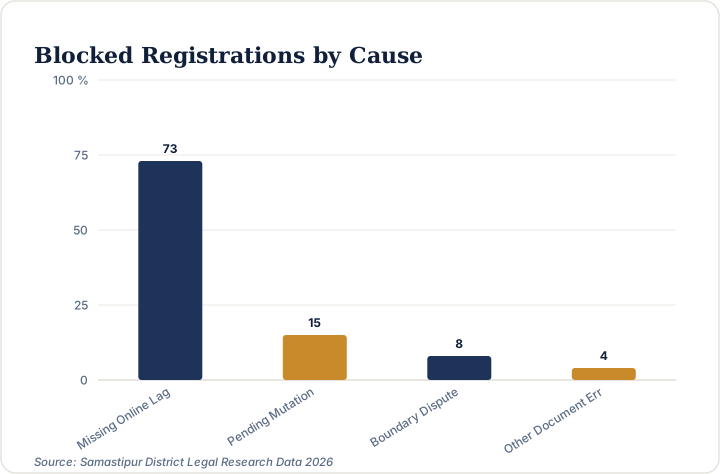
We often assume that a physical document carrying a government seal is the ultimate truth. For decades in Bihar, farmers and buyers relied on the manual receipt issued by the Circle Office. However, the landscape of property law has fundamentally shifted. In Samastipur alone last quarter, 73 percent of blocked land registrations were traced back to a specific discrepancy: the seller held an offline tax receipt, but the online portal showed a "Nil" Lagaan status or listed a completely different Raiyat (landowner).
Fraudsters exploit this gap. They know that forging a physical Rasid costs less than ₹500, but manipulating the central Bihar Bhumi database is nearly impossible. They present the fake offline receipt to convince the buyer that the Jamabandi Panji (Register-II) is active and updated. By the time the buyer takes the sale deed to the Sub-Registrar, the verification fails, and the money is already gone.
The solution is simpler than you think. You do not need to trust the paper. You need to verify the digital footprint. The transition from the old CS Khatian (Cadastral Survey) to the RS Khatian (Revisional Survey) and now to the fully digitised Jamabandi means that the online record is the only record that matters during a transaction.
What Is The Bihar Lagaan Rasid
The Lagaan Rasid is the official land tax receipt issued by the Revenue and Land Reforms Department of Bihar. Governed historically by Section 58 of the Bihar Tenancy Act, 1885, this receipt proves that the current occupant has paid the annual rent to the state government. It acts as primary evidence of possession and an active Jamabandi.
Understanding this document is your first line of defence. It is not merely a tax invoice. In the eyes of the revenue court, the person paying the Lagaan is presumed to be the rightful occupant. If your name is not on the Rasid, you will face severe hurdles when applying for a Land Possession Certificate or trying to sell the plot.
The Link Between Jamabandi And Kewala
Many buyers believe that holding a registered sale deed, locally known as a Kewala, means they own the land outright. This is a dangerous half-truth. Section 17 of the Registration Act, 1908 mandates the registration of any sale of immovable property exceeding ₹100. Furthermore, Section 54 of the Transfer of Property Act, 1882 defines how that sale is legally executed.
However, the Sub-Registrar's office only registers the transaction. They do not guarantee the underlying title. Once you register the Kewala, you must apply for Dakhil Kharij (mutation). Only when the mutation is approved does the Circle Officer open a Jamabandi in your name.
Paying the Lagaan is the final, critical step that activates that Jamabandi. If you skip the Lagaan payment, your mutation remains a dormant entry. I have helped hundreds of families with exactly this problem. They hold a Kewala from ten years ago but never paid the online Lagaan. When they go to sell, the system blocks them because their ownership chain is incomplete.
How To Check Lagaan Status Online
Before you pay any seller or attempt to download a receipt, you must verify the current status of the land. The Bihar Bhumi portal provides a transparent window into the state's revenue records, provided you know exactly which details to input.
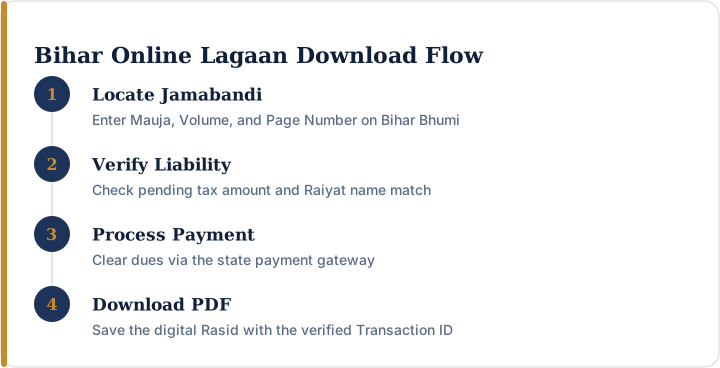
First, you need the basic geographical identifiers of the plot. You will need the District name, the Anchal (Block), the Halka (Panchayat), and the Mauja (Village). More importantly, you need the specific record identifiers: the Volume Number (Bhag Bartaman) and the Page Number (Prishth Sankhya).
If you do not know the Volume and Page numbers, you can search the portal using the Khata number or the Khesra (plot) number. Once you locate the correct Jamabandi, the system will display the current Raiyat's name, the total area of the land, and the outstanding Lagaan amount. If the outstanding amount dates back several years, or if the name does not match your seller exactly, you must halt the transaction immediately.
The Online Payment And Download Process
Paying your land tax and securing the digital Rasid is a straightforward process if your Jamabandi is correctly digitised. The state has streamlined this to eliminate the need for physical visits to the Circle Office.
Here is the exact sequence you should follow to secure your 2026 document:
| Step | Action Required | Verification Check |
|---|---|---|
| 1. Portal Access | Visit the official Bihar Bhumi portal and select 'Bhu-Lagaan'. | Ensure the URL ends in bihar.gov.in to avoid phishing sites. |
| 2. Enter Details | Input District, Anchal, Halka, Mauja, Volume, and Page Number. | Match the displayed Raiyat name with your registered Kewala. |
| 3. View Liability | Click 'Dekhen' to view the outstanding tax amount. | Note the financial years covered by the pending amount. |
| 4. Online Payment | Proceed to the payment gateway and use UPI, Net Banking, or Card. | Save the transaction reference number immediately. |
| 5. Download Rasid | Click 'Laggan Rasid' to generate the PDF receipt. | Verify the digital transaction ID and current date on the printout. |
Once downloaded, this digital Rasid is fully valid for all legal and banking purposes, including applying for a LPC online apply Bihar or securing an agricultural loan. You do not need a manual signature from the Karamchari for an online receipt.
When The Portal Shows Pending Records
Sometimes, you follow all the steps perfectly, but the Bihar Bhumi portal returns a frustrating message: "Jamabandi Not Found" or the Lagaan amount shows as zero despite you never having paid it. Before we panic, let us understand what is actually happening behind the scenes.
This usually means your manual Jamabandi was never migrated to the digital database, or there is a spelling mismatch in the digitised record. In 2026, the government requires you to use the Parimarjan portal to rectify these errors. You must submit a digital application along with an affidavit, your registered Kewala, and your old offline Rasid to the Circle Officer.
The official timeline for a Parimarjan resolution is 21 working days. During this period, your title is in a state of administrative limbo. You cannot sell the property, and you cannot use it as collateral. This is why I advise every property owner to check their online Lagaan status annually, even if they have no immediate plans to sell. Waiting until you have a buyer to discover a missing Jamabandi is a recipe for a collapsed deal.
Three Red Flags In A Downloaded Rasid
If you are a buyer reviewing a Lagaan Rasid provided by a seller, you must scrutinise the document with a highly critical eye. Fraudsters have become adept at altering PDFs.
First, check the Transaction ID. Every legitimate online Rasid generated in 2026 has a unique, verifiable transaction alphanumeric code. If this field is blank or looks manually typed, the document is highly suspicious.
Second, verify the financial year. A seller might show you a genuine online Rasid from 2021, claiming it is the most recent one available. Land tax must be cleared up to the current financial year before any Bihar Dakhil Kharij status can be updated for a new buyer.
Third, cross-reference the Mauja and Thana numbers on the Rasid with the original registered deed. A common fraud pattern involves showing a valid Rasid for a low-value agricultural plot while selling a high-value residential plot in the same village. The names will match, but the Khesra numbers will expose the lie.
The Advocate's Final Verification Checklist
Securing your land in Bihar requires a proactive approach to your documents. The Lagaan Rasid is the heartbeat of your property title. As long as it is pulsing with current, online payments, your ownership remains visible and protected by the state.
Do not rely on the seller's paperwork. Pull the records yourself from the central database. Ensure that the chain of title flows logically from the Khatian to the registered deed, through the mutation order, and finally rests on the current online tax receipt. If any link in that chain is broken or exists only on paper, you must pause the transaction and consult legal counsel. Protecting your family's wealth means verifying every digital footprint before a single rupee changes hands.
Authoritative sources: Bihar Bhumi · India Code - central statutes incl. the Registration Act, 1908
Related guide: how to spot property fraud in India