

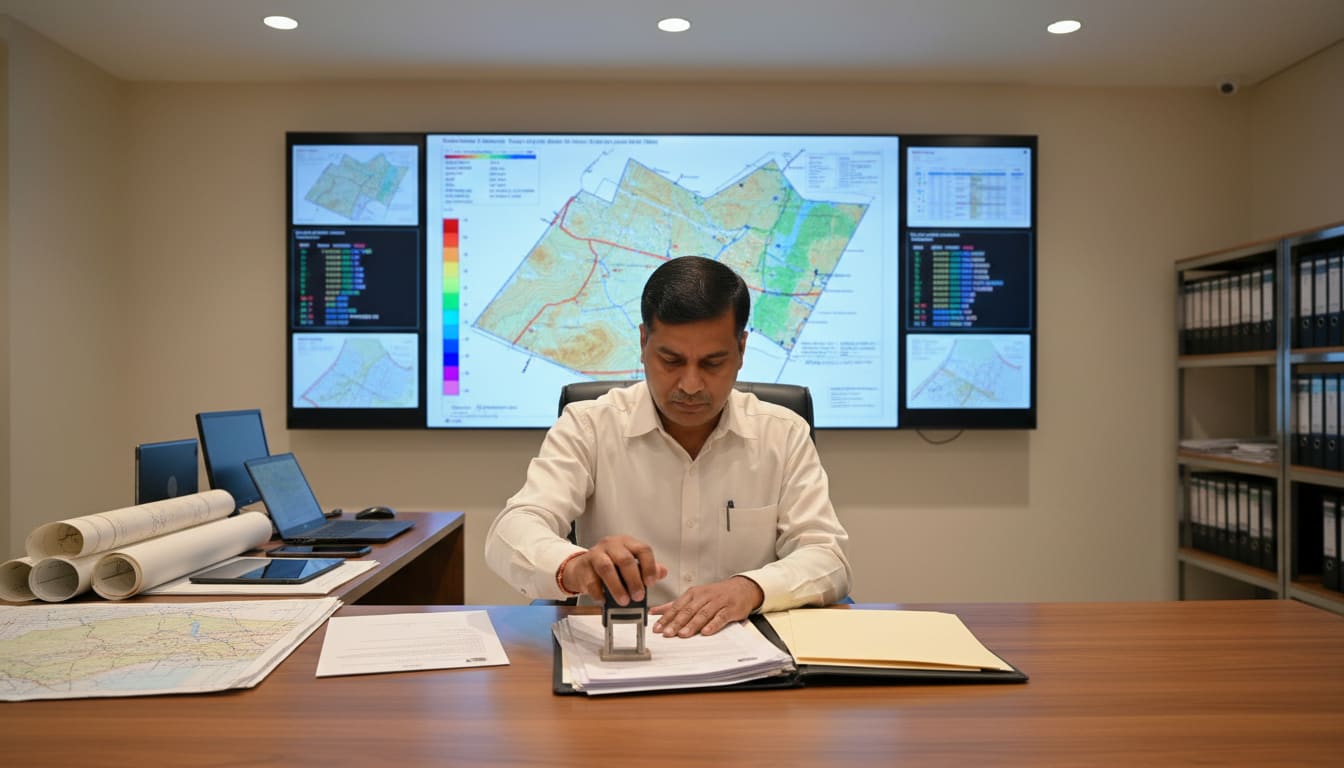
Picture this: 3 AM. A knock on the door. A bank recovery agent is standing on your porch, holding a court order for a property you bought six months ago. You paid the full price. You checked the online portal. You even got the deed registered at the Sub-Registrar's office. The paperwork looked clean. Too clean.
Here is what they do not want you to know. In India, the government does not guarantee your property title. Registration is essentially just a tax receipt. Buyers assume a registered deed means a safe investment. They skip hiring a land verification advocate to save a fraction of the cost. Then the real owner shows up.
India runs no national title guarantee, so a buyer in any state must verify the chain document-by-document because the system places all the risk on you. Title disputes keep reaching the civil courts, often because buyers trusted a government portal without legal interpretation.
What is Title Registration in India?
Under Section 17 of the Registration Act, 1908, registering a sale deed only records the transaction and collects stamp duty. It does not prove the seller actually owned the land. India follows a presumptive title system, meaning the buyer bears all risk of title defects.
Buyers often walk into the Sub-Registrar's office feeling secure. They see the biometric scanners, the official stamps, and the government clerks. They believe the state is verifying their purchase. This is the deadliest illusion in Indian real estate.
The Sub-Registrar is legally bound to register your document if the stamp duty is paid and the parties present valid identification. They do not conduct a background check on the property. They do not verify if the seller legally inherited the land. They do not check if a minor has an undisclosed share in the plot. If I sell you the Taj Mahal and we pay the correct stamp duty, the Sub-Registrar will register the deed. You will hold a registered document for a monument you do not own.
The Clean EC Illusion
Let us look at a specific pattern. A buyer in a tier-two city found a prime residential plot. The seller provided a 15-year Encumbrance Certificate showing zero existing loans. The buyer logged into the state portal, saw the seller's name, and transferred the money.
The EC only reflects transactions that were officially registered. It is entirely blind to equitable mortgages. An equitable mortgage happens when a property owner deposits the original title deeds with a bank to secure a loan. Because this deposit does not always require formal registration, it never appears on the standard EC. The seller had taken a business loan against the property years earlier.
When the seller defaulted, the bank came for the asset. The buyer lost everything. An experienced advocate would have demanded to see the original mother deed. When the seller claimed it was "lost in a flood", the advocate would have stopped the transaction immediately.
What a Land Verification Advocate Actually Does
Many buyers ask what an advocate does that they cannot do themselves online. The difference is the depth of the investigation. You are looking at a snapshot. The advocate is looking at a 30-year motion picture.
| Verification Step | What the Buyer Sees | What the Advocate Investigates |
|---|---|---|
| Portal Check | Name matches the current seller | Checks the Record of Rights history for illegal mutations |
| Encumbrance | Pulls a 15-year online EC | Traces the title chain back 30 years for missing links |
| Sale Deed | Downloads a standard template | Drafts custom indemnity clauses under Section 54 |
| Court Records | Assumes no active cases | Searches civil court registries for pending litigation |
An advocate cross-references central databases with local realities. They know that a "clean" record on the portal might just mean the local revenue office has not updated their servers. They pull physical certified copies to match against the digital records.
Section 54 and the Legal Definition of Sale
How do these fraudulent transactions survive legal scrutiny? The answer lies in the paperwork. Buyers frequently download a generic sale deed template from the internet to save a drafting fee.
Section 54 of the Transfer of Property Act, 1882 defines exactly what constitutes a valid sale. But more importantly, Section 55 of the same Act outlines the rights and liabilities of the buyer and seller. A generic template rarely includes robust indemnity clauses. If a title defect emerges five years later, a weak sale deed leaves you with zero legal recourse to recover your money from the fraudulent seller.
A verified advocate drafts a deed that legally binds the seller to compensate you if a third-party claim arises. They insert specific warranties regarding minors' rights, pending tax dues, and litigation. Without these custom clauses, your registered deed is just an expensive piece of paper.
The Cross-State Portal Gap
India's land records are heavily fragmented. While the central government pushes the DILRMP, Digital India Land Records Modernization Programme, execution varies wildly by state.
If you are verifying Karnataka Bhoomi records, the RTC (Record of Rights, Tenancy and Crops) updates differently than the Maharashtra 7/12 extract or the Telangana Dharani portal. An advocate understands the specific lag time of their local system. For instance, there is often a window during the mutation process where a property can be sold twice before the first buyer's name reflects in the public database.
In a dual-registration scam, the fraudster sells the same land to several buyers within days. Because the state portal takes time to reflect a change in ownership, the later buyers see a "clean" record. A local advocate would physically check the Sub-Registrar's daily presentation book, catching the pending registrations.
Hidden Liabilities: Minors and Unregistered Wills
The documents can tell a different story in a family partition case. A buyer purchased a plot from a man who inherited it from his father. The revenue records were perfectly updated in the son's name.
But there was a fatal flaw. The original owner had died intestate (without a will), leaving behind a widow, the son, and two daughters. Under Hindu Succession law, all legal heirs have an equal share. The son had simply bribed a local official to mutate the entire property into his sole name, ignoring his sisters.
Four years later, the sisters filed a partition suit. The court froze the property. The buyer, who had already started building a house, was barred from entering his own land. An advocate would have demanded a formal Family Tree Certificate and required all legal heirs to sign the sale deed as consenting witnesses or executing parties. The portal will never tell you about a hidden sister. Only a legal mind looking for the gaps will catch it.
The True Cost of Skipping Legal Counsel
Let us talk about the real numbers in 2026. A standard property transaction involves stamp duty ranging from 5% to 7% of the property value. On a ₹78 lakh property, you are paying the government over ₹5.4 lakhs just in taxes.
A senior property advocate charges a fee for a comprehensive title search report. Buyers routinely balk at this fee, viewing it as an unnecessary expense.
But consider the alternative. Civil litigation in India can take many years to resolve. The legal fees for defending a title suit add up over that time, not to mention the mental agony and the total illiquidity of your asset. You cannot sell, mortgage, or build on a disputed property. Saving a small fee upfront to risk the whole property is the definition of financial suicide.
Next Steps: Your 2026 Title Defense Strategy
The trail went cold for many victims because they realized their mistake years after the money changed hands. You do not have to be one of them. Before you transfer a single rupee of advance payment, you must build a defensive wall around your transaction.
First, demand the entire chain of title documents from the seller, not just the current deed. You need to see exactly how the property changed hands over the last 30 years.
Second, never rely solely on digital portal extracts. The law prioritizes physical, certified copies from the Sub-Registrar and Tahsildar offices.
Third, engage a local advocate who specializes exclusively in property law within the specific district where the land is located. A corporate lawyer in Mumbai cannot effectively verify agricultural land records in rural Odisha or Karnataka. You need local intelligence. You need someone who knows exactly which revenue clerk is slow and which survey numbers are currently under government dispute.
The risk is real. The fraudsters are getting smarter, using forged digital watermarks and exploiting portal lag times. Your only protection is a paranoid, experienced legal professional standing between you and the seller.
Authoritative sources: India Code - central statutes incl. the Registration Act, 1908
Related guide: AI title verification vs an advocate search