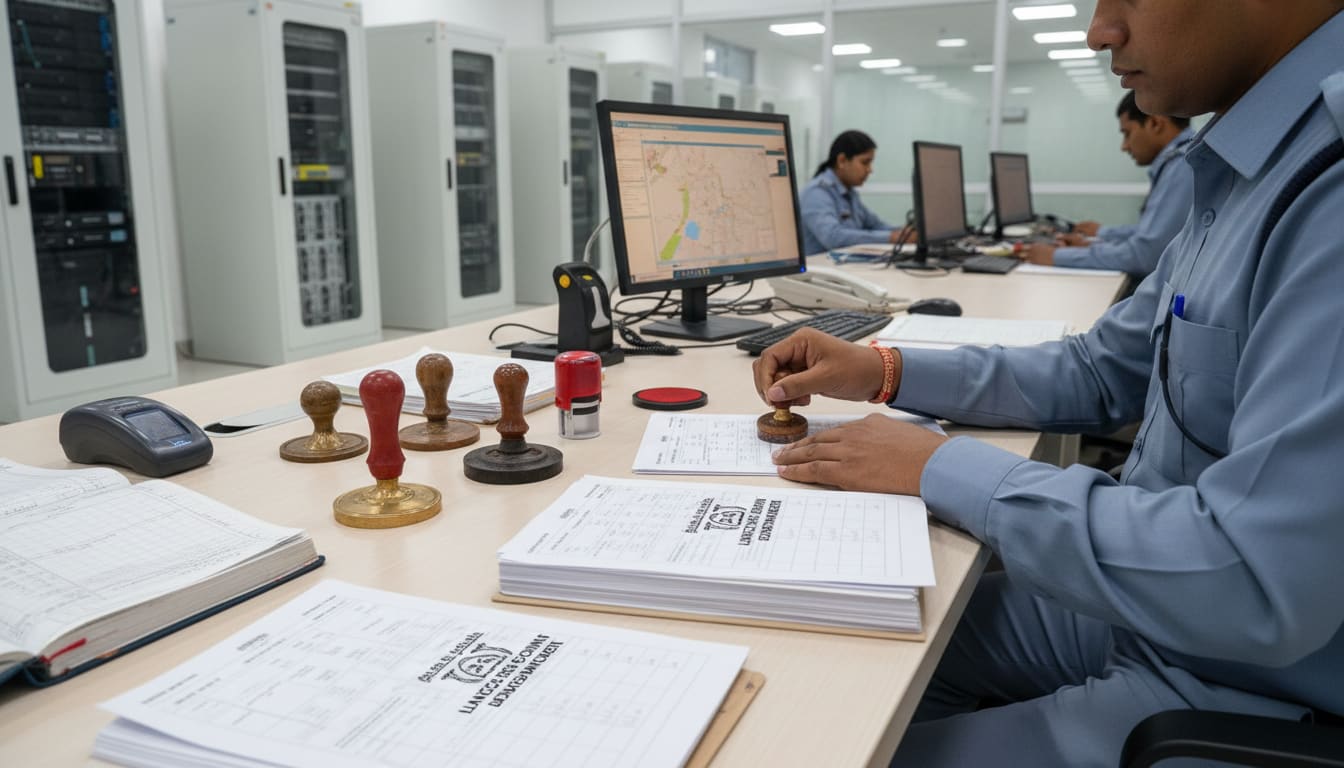
Picture the file in front of you. A Sale Deed, a Khatiyan, an Encumbrance Certificate. Three documents. Three names. Three different plot numbers. Now reconcile them. I have seen this pattern before. A family invests their life savings, trusting a government stamp. They think a registered deed means absolute ownership. They are wrong. In India, the paperwork can look clean. Too clean. But when I dug into the records, the truth was worse. A ₹58 lakh investment wiped out in seconds. Here is what they do not want you to know about verifying property documents in 2026.
Buyers across the country fall into the same trap. They assume the government verifies ownership before registering a sale. This is a fatal misunderstanding of Indian law. If you are reading this as part of your research into the NRI Land Investment Handbook: Buying Property in Odisha, pay close attention. The rules of the game have changed, and the fraudsters are weaponising the legal gaps.
The Presumptive Title Trap
India runs no national title guarantee. This is the single most important fact you must learn. When you visit a Sub-Registrar office, the officials only verify the identity of the parties and the payment of stamp duty. They do not guarantee that the seller actually owns the land.
Under Section 17 of the Registration Act, 1908, registration confers a presumptive title. It is not conclusive. The government simply records the transaction. Furthermore, Section 54 of the Transfer of Property Act, 1882 mandates that any sale of immovable property valued over ₹100 must be registered. But these laws do not force the Sub-Registrar to cross-check the revenue records before stamping the deed.
This creates a massive blind spot. A fraudster can register a Sale Deed for a property they do not own. The document will look entirely genuine. It will have the official seal, the biometric fingerprints, and the correct stamp paper. But legally, it is worthless if the seller lacked the right to sell.
The documents told a different story. The buyer holds a flawless piece of paper, but the actual ownership remains with someone else in the state revenue portal. You must bridge this gap yourself. You have to verify the documents against the ground reality and the digital records.

What is Title Chain Verification?
Title chain verification is the process of tracing property ownership back through consecutive transfers over a minimum of 12 to 30 years. It requires reconciling the registered Sale Deeds at the Sub-Registrar office with the mutation entries in the state revenue department's Record of Rights (ROR).
If there is a single broken link in this chain, your investment is at risk. You cannot just look at the current seller. You must look at how the current seller acquired the land. Did they buy it? Did they inherit it? Was it gifted?
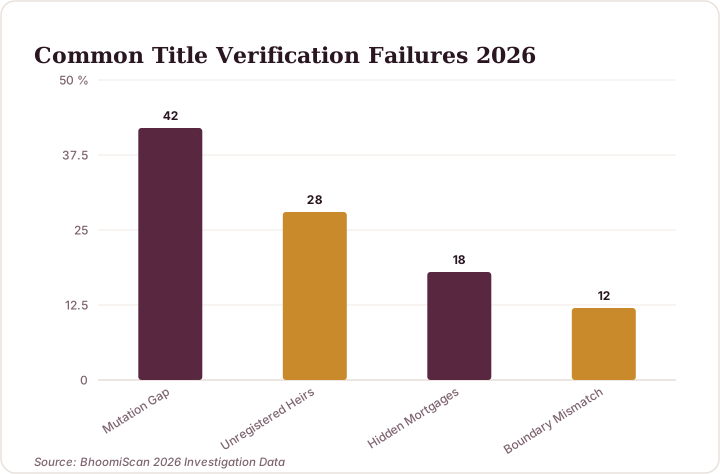
Every transfer must have a corresponding registered document. If the seller inherited the land, you need to see the legal heir certificate or the partition deed. If they bought it, you need the previous Sale Deed. I dug deeper into these chains daily. The most common point of failure is inheritance. One family member sells the entire plot without the consent of the other legal heirs. Years later, a cousin files a lawsuit, and your property is locked in litigation.
The ₹58L Khordha Mutation Case
Let me show you how this plays out in the real world. Consider the 2026 State of Odisha vs. Patra family case. A buyer in Khordha district found a prime residential plot. The seller produced a perfectly registered Sale Deed from 2018. The buyer checked the document. It was genuine. The Sub-Registrar confirmed the registration number. The buyer paid ₹58 lakhs and registered a new deed.
Three months later, the buyer applied for mutation. The Tahasildar rejected the application immediately.
What happened next shocked even me. The seller had indeed bought the land in 2018. But the seller never mutated the property in the local revenue records. The Bhulekh portal still showed the original 2010 owner. Worse, the 2010 owner had unpaid agricultural loans attached to that specific Khatiyan number. Because the 2018 buyer never updated the revenue records, the bank attached the land.
The ₹58 lakh buyer was left with a genuine Sale Deed for a plot that was legally seized by a bank. The seller vanished. The paperwork was real, but the title was defective. If the buyer had checked the Record of Rights before paying the advance, they would have spotted the mismatch instantly.
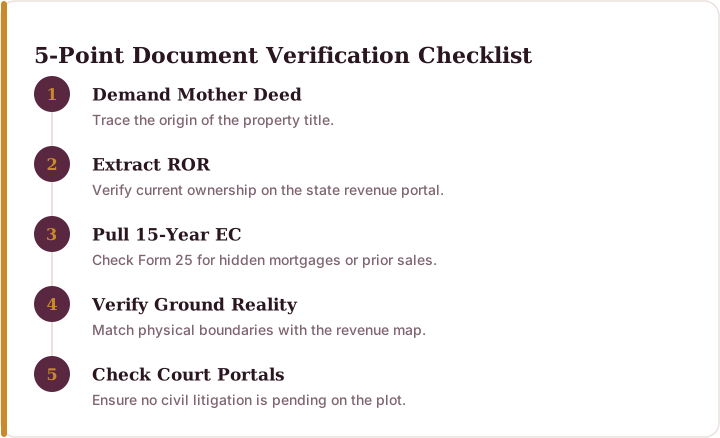
Five Point Document Checklist
You cannot rely on trust. You must rely on a systematic verification process. When I investigate a property, I follow a strict protocol. Do not skip these steps.
- Demand the original Mother Deed. Do not accept photocopies. The Mother Deed proves how the property originally entered the current chain of ownership. If the seller claims it is lost, demand the police FIR copy and the newspaper publication.
- Extract the current Record of Rights. Go to the state revenue portal. Enter the exact survey or Khata number. Ensure the seller's name matches the portal exactly. A mismatch of even a single initial can halt your mutation later.
- Pull a 15-year Encumbrance Certificate. Apply for Form 25 under the Indian Stamp Rules. This certificate lists all registered transactions on the property. Look for hidden mortgages, lease agreements, or prior sales.
- Verify the physical boundary markers. The dimensions on the Sale Deed must match the revenue map (Bhunaksha) and the physical ground reality. Fraudsters often sell 2000 square feet on paper when only 1500 square feet exist on the ground.
- Check for pending civil litigation. Search the district court portal using the seller's name and the plot details. A property locked in a title suit cannot be legally transferred.
State Portals vs Sub-Registrar Reality
The fragmentation of land records in India is your biggest enemy. The Sub-Registrar handles the registration of deeds. The Revenue Department handles the actual ownership records and taxation. These two departments rarely talk to each other in real-time.
To verify documents, you must navigate both systems. The central government is attempting to unify this through the DILRMP, Digital India Land Records Modernization Programme, but execution varies wildly by state.
Here is how the portals differ across major jurisdictions.
| State | Revenue Record Portal | Primary Document Name | Local Risk Factor |
|---|---|---|---|
| Odisha | Bhulekh | ROR / Khatiyan | Sabak vs Hal settlement mismatch |
| Karnataka | Bhoomi | RTC / Pahani | B-Khata properties sold as A-Khata |
| Telangana | Dharani | Pattadar Passbook | Prohibited list (Section 22A) blocks |
| Maharashtra | Mahabhumi | 7/12 Extract | Unrecorded tenant rights |
You must cross-reference the registered deed from the Inspector General of Registration (IGR) portal with the revenue record from the portals listed above. If the IGR portal shows a sale, but the revenue portal does not show the mutation, you have a defective title chain.
The Encumbrance Certificate Illusion
Many buyers think a clean Encumbrance Certificate means a clean title. This is a dangerous illusion. The EC, issued under Form 25, only reflects transactions registered at the Sub-Registrar office.
Here is what they do not want you to know. The EC does not show unregistered wills. It does not show oral partitions between family members. It does not show tax defaults. It does not show if the government has earmarked the land for highway acquisition.
I investigated a case where the EC was spotless for 30 years. The buyer paid ₹42 lakhs. A week later, the National Highways Authority of India arrived with bulldozers. The land had been acquired by the government three years prior. The acquisition notice was published in the local gazette, but government acquisitions do not automatically appear on a standard Form 25 EC.
You must check the local municipal or panchayat office for acquisition notices and zoning violations. Do not rely on a single piece of paper.
Next Steps for Safe Verification
The trail went cold for many victims because they trusted the seller's advocate. Never use the seller's legal counsel to verify your documents. They have a vested interest in closing the deal, not in protecting your life savings.
Your next step is to secure an independent verification. Gather the Sale Deed, the previous Mother Deed, the latest tax receipt, and the ROR extract. Cross-check the names, the plot numbers, and the boundaries across all four documents.
If you find a gap, demand a registered rectification deed from the seller before you pay a single rupee of the advance. If they refuse, walk away. There is always another plot. There is rarely another chance to recover a stolen life savings.
Related guide: property document verification checklist
Navigating the Sabik-Hal Record Discrepancy
A common trap in Odisha real estate-often leading to the exact type of ₹58 Lakh mutation gap mentioned earlier-involves the mismatch between Sabik (old) and Hal (new) land records. During major land settlement drives under the Odisha Survey and Settlement Act, 1958, plot numbers, Khata numbers, and boundaries were entirely redrawn. A seller might present a 1980s Mother Deed featuring a Sabik plot number, while the current Record of Rights (ROR) on the Bhulekh portal lists a completely different Hal plot number.
In rapidly developing districts like Khurda and Cuttack, fraudsters exploit this confusion by selling the same physical land twice: once using the old plot number and once using the new one. To bridge this documentary gap, you must obtain a Sabik-Hal correlation certificate directly from the local Tahasil office.
Follow these mandatory steps to verify the plot's settlement history:
- Apply for a certified Sabik-Hal correlation report at the Tahasil office (standard government fees are ₹20 per page for the physical certified copy).
- Request the corresponding village map (Trace Map) to visually match the old boundaries with the newly recorded dimensions.
- If discrepancies exist, file a record correction petition under Rule 34 of the Odisha Survey and Settlement Rules, which typically takes 30 to 45 days for the Tahasildar to process and resolve.
- Cross-reference the Chaka (consolidated plot) number if the land falls under agricultural zoning to ensure no fragmentation laws are violated.
Concrete Takeaway: Never purchase property in Odisha based solely on a Sabik plot number. Always demand the official Sabik-Hal correlation certificate and an updated Hal ROR from the seller to ensure the land's identity is legally established before registration.
Hidden Restrictions Under the OLR Act
Even if the plot numbers align perfectly, the legal status of the seller might render the transaction entirely void. Section 22 of the Odisha Land Reforms (OLR) Act, 1960, strictly prohibits the transfer of land owned by a Scheduled Tribe (ST) person to a non-ST person without prior written permission from the Sub-Collector or Revenue Officer. Similarly, Section 22-A places strict transfer restrictions on Scheduled Caste (SC) lands.
Buyers in scheduled districts like Mayurbhanj, Sundargarh, and Koraput frequently fall victim to this oversight. A broker may facilitate the sale, register the deed, and collect your life savings. However, under Section 23 of the OLR Act, such unauthorized transfers are legally invalid from day one. The government is empowered to evict you without any compensation, and you may face penalties of up to ₹200 per day for illegal occupation of the land.
To protect yourself from devastating OLR Act violations, execute the following checks:
- Pull the current ROR from Bhulekh Odisha and check the "Caste" column of the recorded tenant to identify ST/SC status.
- If the seller belongs to a restricted category, demand the original, stamped permission order from the Sub-Collector authorizing the specific sale to you.
- Verify the authenticity of this permission order by submitting a Right to Information (RTI) request to the issuing Sub-Collector’s office, which mandates a response within 30 days.
- Check for any pending Section 23 restoration cases against the plot at the local Revenue Court.
Concrete Takeaway: If the property involves tribal or scheduled land, do not sign the Sale Deed or pay a single rupee of advance until you have independently verified the Sub-Collector's explicit written permission through the local revenue office.