
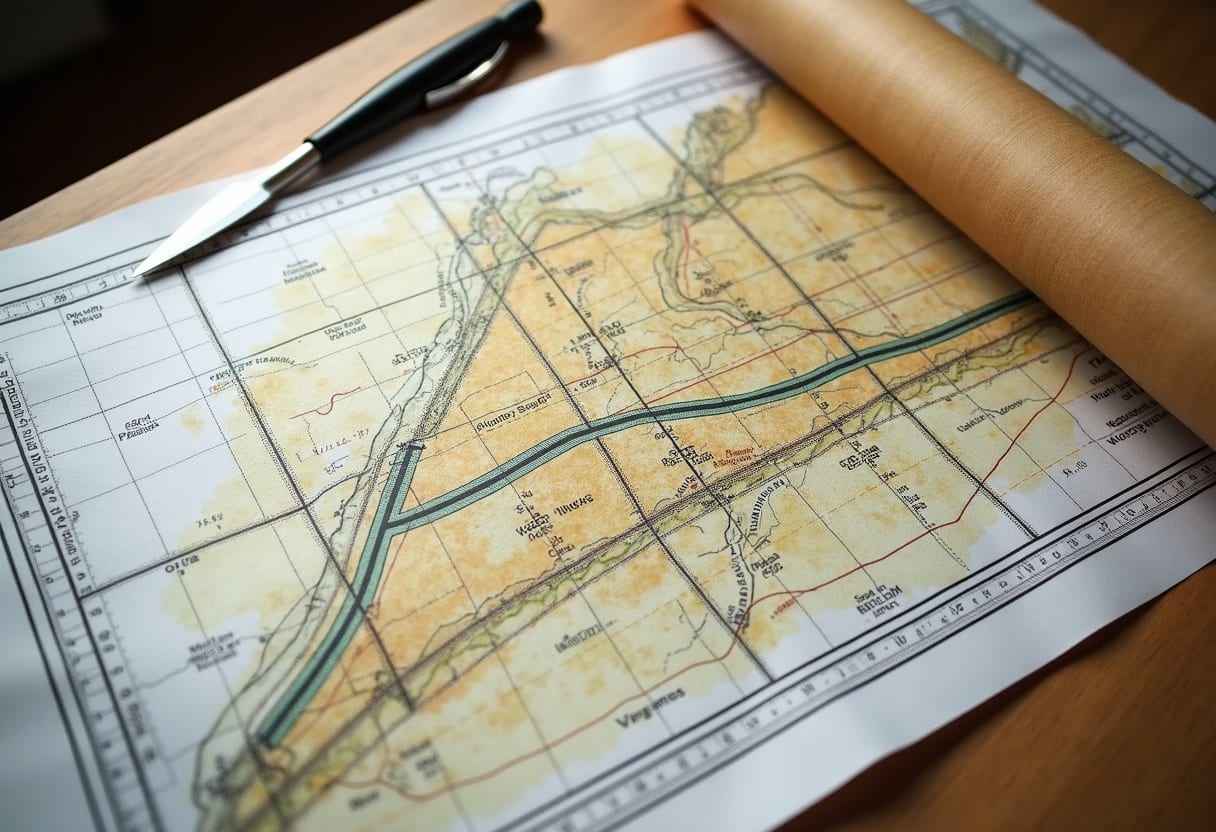
Picture the file in front of you: a pristine registered Sale Deed, a recent Encumbrance Certificate, and a freshly printed Hal Record of Rights. Three documents, all bearing the seller's name, pointing to a highly lucrative two-acre plot just off the Paradip-Chandikhole highway in Jagatsinghpur district. The asking price is steep, but the industrial growth in the region makes it feel like a steal. You review the papers, verify the names, and wire the advance. Now, reconcile those documents with the hidden land acquisition notification sitting quietly in the local Kujang Tahasildar's office. This is exactly how buyers get caught. They assumed that because the online portal showed the seller's name, the land was safe to buy. They did not realise that in rapidly developing industrial zones, the online land record is only half the story. The resulting mistake cost them their entire investment capital (IGR Odisha fee schedule). The rules of verification here are fundamentally different from buying a residential plot in Bhubaneswar.
The Paradip Industrial Boom and Its Risks
Let me share something that could save you lakhs. Consider a mid-sized logistics company from Cuttack that wanted to set up a warehouse near the Indian Oil Corporation Limited (IOCL) refinery in Paradip. They found a local seller offering seemingly perfect land (IGR Odisha SRO directory). The buyer pulled the records from the Bhulekh Odisha portal. The seller's name was clearly listed under the rightful Khata number. The buyer paid the seller and registered the property. Three weeks later, they applied for mutation. The application was summarily rejected by the Tahasildar. Why? Because the state government had earlier issued a preliminary notification under the land acquisition laws to acquire that exact patch of land for a port connectivity project. The seller knew this. The seller knew the compensation offered by the government would be far lower than the commercial market rate, so they rushed to sell it to an unsuspecting private buyer before the final acquisition order was published. Once land is notified for government acquisition, any subsequent private sale is legally void. The buyer lost the purchase money, and because the seller immediately moved the funds through multiple accounts, recovery is tied up in a lengthy civil suit that could take a decade to resolve (Orissa High Court). The risk is real. Verify before you sign.
Before we panic, let us understand what is actually happening. The root cause is a disconnect between the civil registration system and the industrial acquisition notifications.
What is the IDCO Leasehold vs Freehold Risk?
The Odisha Industrial Infrastructure Development Corporation (IDCO) acquires vast tracts of land in Jagatsinghpur to lease to industries. A common fraud pattern involves a seller holding an IDCO leasehold plot and attempting to sell it as freehold property. Under Section 17 of the Registration Act, 1908, the transfer of immovable property must be registered. However, IDCO lease agreements strictly prohibit the sub-leasing or outright sale of the land without explicit, written permission from the nodal authority. Sellers will often present an older Record of Rights from before the IDCO acquisition, convincing the buyer that the land is still private freehold. If you purchase IDCO leasehold land without authorization, the Sub-Registrar might execute the deed if the acquisition data has not synced to their server, but the revenue department will never mutate the land in your name. You will hold a registered deed that is practically worthless.
Section 8A OLR Act: The Agricultural Conversion Blind Spot
Another massive issue in the Jagatsinghpur and Paradip belt involves land use. Most of the available land in Erasama and Kujang tehsils is classified as agricultural land (Chaka). Investors buy these plots intending to build commercial warehouses, truck terminals, or worker housing. Here is a secret most people do not know: buying agricultural land for commercial use without prior conversion is a direct violation of state law. Under Section 8A of the Odisha Land Reforms Act, 1960, a landowner must apply for the conversion of agricultural land to non-agricultural purposes through the Tahasildar. The fee for conversion varies. Fraudsters in Jagatsinghpur often sell agricultural land at commercial rates, falsely promising the buyer that conversion is a simple formality that takes a week. It is not. If the land falls within a restricted green belt or a proposed water drainage zone for the port, the Tahasildar will reject the Section 8A application entirely. You will be left with an expensive plot where you are legally only allowed to grow paddy.
The 3 Land Record Checks You Must Run in Jagatsinghpur
To protect yourself from these specific industrial zone traps, you must run a multi-layered verification. A simple online check is no longer sufficient. You must follow these three steps meticulously. 1. Verify the Hal Khata on Bhulekh Odisha: Visit the official Bhulekh Odisha website. Select Jagatsinghpur district, then your specific tehsil (like Kujang or Erasama), and the exact village (Mouza). Check the Khata number. Ensure the kissam (land type) matches what the seller is claiming. If it says agricultural, you cannot build on it immediately. 2. Extract a 30-Year Encumbrance Certificate: Do not rely on the EC provided by the seller. Go to the IGR Odisha portal or the local Sub-Registrar office and pull a fresh encumbrance certificate spanning at least 30 years. You are looking for hidden mortgages to cooperative banks or undisclosed IDCO lease agreements. 3. Check the Land Acquisition Office (LAO): This is the most critical step for Jagatsinghpur. You must physically visit the District Collectorate or the local Tahasildar office and verify if the specific plot number falls under any Section 4 or Section 6 notifications of the Right to Fair Compensation and Transparency in Land Acquisition, Rehabilitation and Resettlement Act, 2013. See your actual records here - no lawyer needed.
Skipping that third step is how buyers get caught. The online systems are improving, but land acquisition notices often take months to reflect digitally on the public-facing portals.
Sabak vs Hal Khata: Resolving Coastal Odisha's Legacy Records
Jagatsinghpur is an older, established district with a complex history of land settlements. When verifying the chain of title, you will frequently encounter discrepancies between the Sabak (old) and Hal (new) land records. The Sabak records date back to the earlier settlement periods, while the Hal records represent the most recent survey. A common discrepancy occurs when a plot was subdivided during a family partition decades ago, but the Hal record incorrectly lists the entire area under a single owner due to a clerical error during the settlement survey. If you are buying a plot where the seller's name is on the Hal record but the Sabak record shows a different lineage without a clear registered transfer deed, you are walking into a title dispute. Section 54 of the Transfer of Property Act, 1882 clearly defines a sale as a transfer of ownership in exchange for a price paid. If the seller cannot prove how their family acquired the title between the Sabak and Hal settlements, they do not have a marketable title to transfer to you. Understanding the Sabak vs Hal khata difference is mandatory for any high-value transaction in coastal Odisha.
What to Do Next Before You Pay the Advance
The industrial boom in Paradip and Jagatsinghpur presents incredible investment opportunities, but the landscape is heavily mined with acquisition traps, un-converted agricultural plots, and legacy record disputes. Never pay an advance based solely on a digital printout. Demand the original Sale Deed, the Hal RoR, and a trace of the title going back at least 30 years. Cross-reference the plot number with the local Land Acquisition Office to ensure it is not earmarked for the next port expansion or highway project. The solution is simpler than you think: treat every piece of paper with professional skepticism until an independent verification confirms its validity. Don't wait for a problem. Let's verify together.