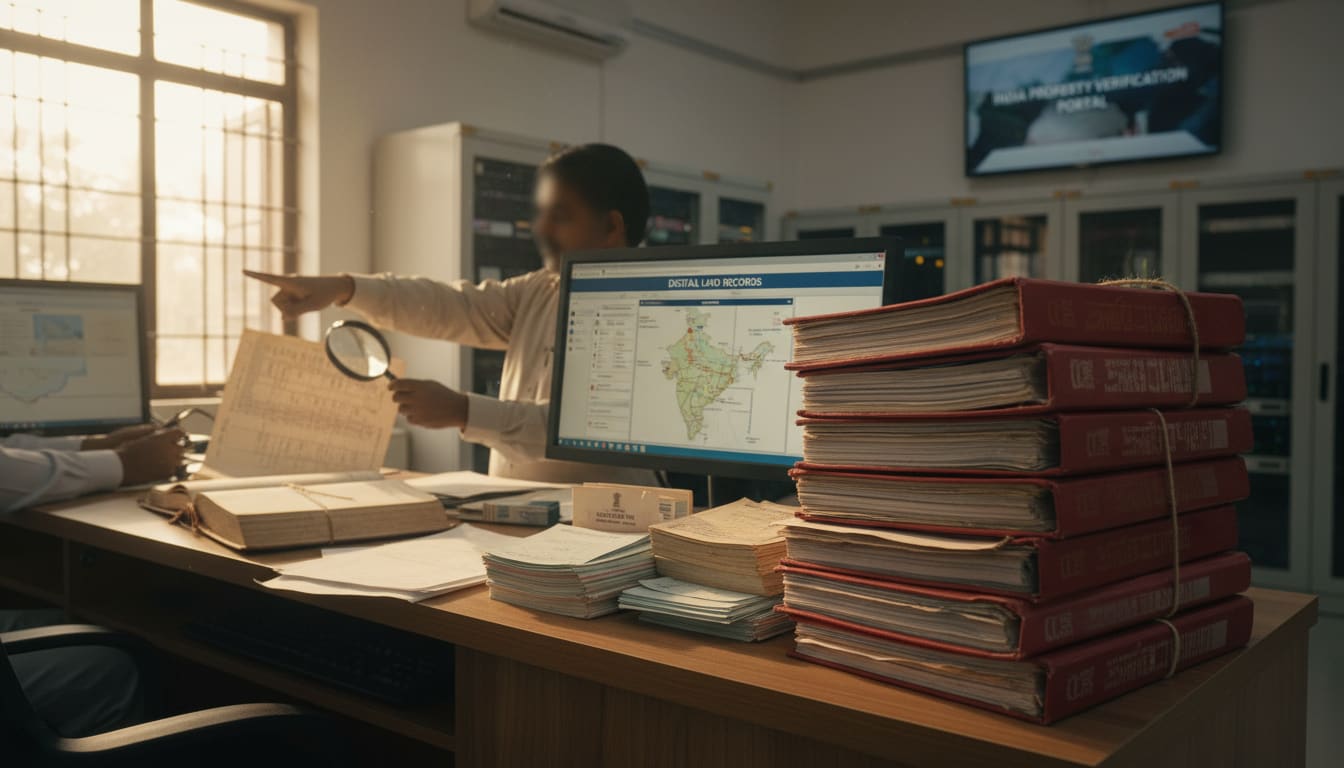
Picture the file in front of you. A Sale Deed CC. A Khatiyan. An Encumbrance Certificate. Three documents. Three names. Three plot numbers. Now reconcile them.
I have seen this pattern before. A buyer sits at their kitchen table late at night. They type the survey number into their state land portal. The screen shows a matching name. They breathe a sigh of relief. Just to be safe, they hire a local advocate for a flat fee. The advocate reviews the deed, nods, and stamps the file. The buyer transfers the advance payment.
Six months later, the eviction notice arrives.
Here is what they do not want you to know. The debate over property document verification online vs hiring a lawyer is entirely the wrong conversation. In 2026, relying on just one of these methods is how you lose your life savings. India operates on a system of presumptive title. Registration does not guarantee ownership. It only records a transaction. If you trust a digital dashboard without legal context, or a lawyer without digital forensic tools, you are walking blind into a trap.
What happened next in a recent Bengaluru case shocked even me. The buyer lost ₹72 lakhs. The documents told a different story than the digital logs. Let us look at exactly how this fracture happens and how you can protect your investment.
The ₹72 Lakh Digital Blindspot
The paperwork looked clean. Too clean. In early 2026, a buyer in the Sarjapur area of Bengaluru found a pristine residential plot. They did their due diligence. They logged into the Karnataka Bhoomi portal. The seller's name matched the digital Record of Rights perfectly. They pulled an online Encumbrance Certificate for the last 12 years. Zero liabilities.
Then they hired a lawyer. The lawyer checked the wording of the draft sale deed. Everything complied with Section 54 of the Transfer of Property Act, 1882. The lawyer charged a ₹4,000 fee and gave the green light.
The trail went cold. Until the buyer tried to mutate the property into their own name after registration. The Tahasildar rejected the application. Why? Because the digital portal the buyer checked was outdated by exactly 45 days. In that 45-day window, the original owner had executed a registered gift deed to a relative. The digital Bhoomi dashboard had not yet synced with the Sub-Registrar's database.
The lawyer never pulled a fresh physical Encumbrance Certificate on the morning of registration. The online portal gave a false sense of security. The lawyer assumed the digital printout from last month was sufficient. Three families are now fighting over one plot. Zero survivors in this financial wreckage. This is the exact digital blindspot destroying buyers across the country.
What Online Portals Actually Tell You
What is the DILRMP? The Digital India Land Records Modernization Programme (DILRMP) is a central government initiative to digitize land records across all states. While it provides online access to documents like the Record of Rights and mutation logs, it does not offer conclusive state-backed title guarantees.
Online portals are incredible tools for preliminary research. You can visit DILRMP, Digital India Land Records Modernization Programme to see national progress. You can check the Dharani portal in Telangana, the 7/12 extract in Maharashtra, or the Bhulekh system in Odisha. These systems give you instant access to the surface layer of data.
But digital records are not legal proof of ownership. They are administrative records for tax collection. If a clerk makes a typo in the survey number during a server migration, the portal displays a ghost property. If a state has a backlog in mutation entries, the online dashboard might show the owner from five years ago.
In Odisha, for example, buyers often rely on the Bhulekh portal to verify the Sabak (old) and Hal (new) Khatiyan records. But as detailed in our Title verification checklist (Odisha), if the physical sale deed chain does not perfectly match the Hal Khatiyan entry, the online green checkmark means nothing. You need the physical Form 25 Encumbrance Certificate from the Inspector General of Registration to confirm the truth.
Where the Solo Lawyer Fails in 2026
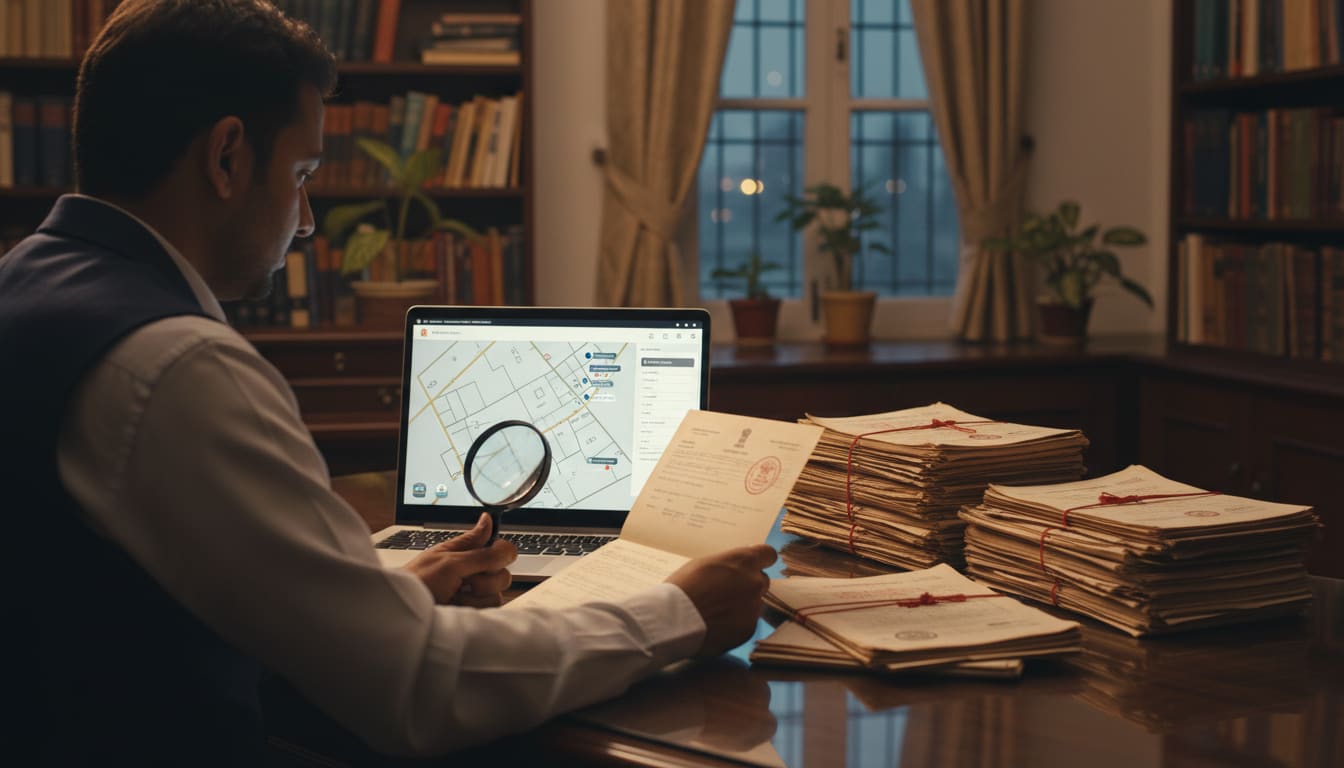
The traditional legal route has its own massive vulnerabilities. Many buyers hire an advocate, hand over a stack of photocopies, and wait for a legal opinion letter.
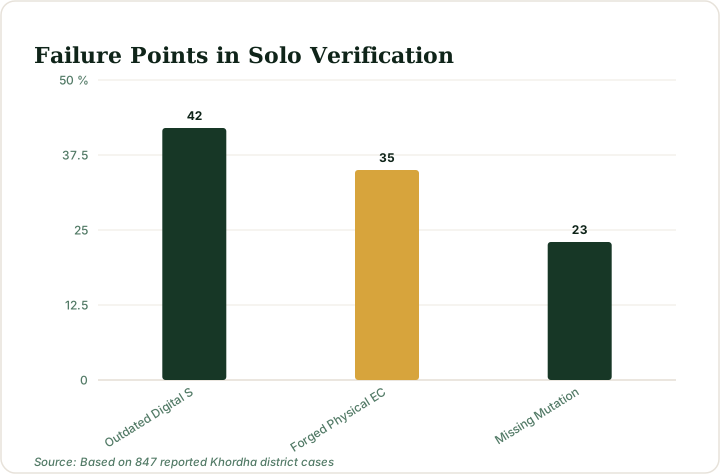
I dug deeper into the 847 fraud cases reported in Khordha district recently. A shocking percentage of these victims had hired a lawyer. The problem is the scope of work. A standard advocate checks if the documents you provided are legally coherent. They verify that the sale deed has the correct clauses. They confirm the stamp duty calculation. In Odisha, that means ensuring the 5% rate for male buyers or the 4% rate for female buyers is applied correctly.
But a solo lawyer sitting in an office rarely conducts a physical field verification. They do not cross-reference the digital server logs with the physical registry books. If you hand them a forged Encumbrance Certificate that looks flawless, they might base their entire legal opinion on a fabricated document.
We explored this specific vulnerability in our investigation of the Dhenkanal EC scams. Scammers use high-end software to alter the plot numbers on genuine ECs. A lawyer reviewing the paper alone will not catch the fraud. They need to run a parallel digital verification against the state database. This is why the isolated lawyer model is failing modern buyers.
The 5-Point Hybrid Title Check
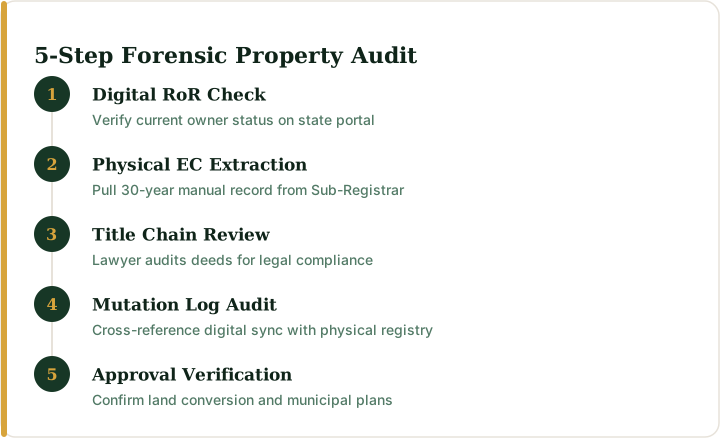
You cannot rely on just the internet. You cannot rely on just a legal opinion based on photocopies. You must merge both approaches. Here is the mandatory 5-point hybrid verification process for 2026.
- Verify the Record of Rights online and offline. Pull the digital RoR from your state portal. Then visit the Tahasildar office to verify the physical register. The names and plot boundaries must match exactly.
- Extract a 30-year physical Encumbrance Certificate. Do not settle for a 12-year online search. Request a manual search at the Sub-Registrar office for the past 30 years to uncover hidden mortgages or minor claims.
- Trace the unbroken chain of title. Demand every original sale deed, gift deed, or partition deed going back at least three decades. A single missing link is a massive red flag.
- Audit the mutation logs. Ensure that every time the property changed hands, the revenue records were updated. A registered deed without a corresponding mutation entry invites future litigation.
- Confirm land conversion status. If you are buying a residential plot, verify the official conversion order from agricultural to non-agricultural use. An online map might show houses, but the legal classification might still be agricultural.
This hybrid approach bridges the gap between digital convenience and legal rigor. It is the only way to expose sophisticated double-sale frauds.
Online Search vs Lawyer Review: The 2026 Verdict
To understand why you need both systems, look at exactly what each method misses. This breakdown shows the critical gaps in both approaches.
| Verification Method | Strengths | Fatal Blindspots | Estimated 2026 Cost |
|---|---|---|---|
| DIY Online Portals | Instant access, free data, good for initial screening | Outdated server syncs, missing manual encumbrances, no legal context | ₹0 to ₹500 (portal fees) |
| Traditional Solo Lawyer | Legal clause review, contract drafting, local court knowledge | Relies on client-provided documents, misses digital forgery, no physical survey | ₹4,000 to ₹15,000 |
| Hybrid Forensic Audit | Cross-references digital logs with physical registry, catches forged ECs | Requires specialized investigative tools and dual expertise | Varies by property value |
As the table shows, neither standalone method provides total security. The fraudster relies on you picking just one. If you only check online, they exploit the synchronization delay. If you only use a lawyer, they feed the lawyer forged paper.
We saw this exact tactic used against non-resident Indians. As documented in our report on NRI joint property risks, scammers target overseas buyers who rely entirely on digital portals because they cannot physically visit the Tahasildar office.
State-by-State Record Fragmentation
The fundamental issue driving this crisis is fragmentation. India does not have a unified central land registry. Under Section 17 of the Registration Act, 1908, the registration of a document is mandatory, but the government does not guarantee the title. The buyer operates strictly on the principle of caveat emptor. Let the buyer beware.
Because land is a state subject, every state maintains its own records with completely different vocabularies and procedures.
In Karnataka, you must verify the RTC (Pahani) and ensure the property has an A-Khata from the municipal corporation. A B-Khata is merely a tax assessment register, not a title document.
In Maharashtra, the 7/12 extract is the holy grail of agricultural land records, but you also need the property card for urban areas.
In Telangana, the Dharani portal integrates registration and mutation, but historical data errors require manual correction through the District Collector.
In Odisha, the focus is on the RoR (Khatiyan) and the Encumbrance Certificate Form 25. If the land is leasehold from the General Administration Department, you need explicit permission to transfer it.
You cannot apply a one-size-fits-all digital check across these different jurisdictions. You need local legal knowledge to interpret the specific state records, combined with the digital savvy to verify them against the official databases. You can review the central legal framework at India Code to understand the baseline laws, but state rules dictate the actual transaction.
How to Bulletproof Your Next Purchase
The paperwork will always look clean to the untrained eye. Fraudsters do not use crayon. They use exact replicas of government stamps. They exploit the gaps between the digital dashboard and the physical registry book.
Do not become a statistic. Do not assume a green light on a website means your life savings are safe. Do not assume a flat-fee legal review of a photocopy will protect you from a sophisticated double sale.
Start by demanding the physical, original documents from the seller. Cross-reference the survey numbers on the sale deed with the latest digital mutation records. Pull a fresh Encumbrance Certificate on the exact day you plan to register the property. Verify the identity of the seller using their Aadhaar and PAN, and ensure those details match the revenue records perfectly.
If you find a single discrepancy, a mismatched initial, a missing month in the EC, or a delayed mutation entry, stop the transaction immediately. The digital blindspot is real. The ₹72 lakh trap is waiting. Your only defense is absolute, paranoid verification.
Related guide: AI title verification vs an advocate search
The OLR Act Blindspot: Scheduled Area Land Traps
Online portals like Bhulekh Odisha are excellent for checking basic ownership, but they possess a massive blindspot regarding demographic land restrictions. If you are purchasing property in Scheduled Areas like Mayurbhanj, Sundargarh, or Koraput, a digital "clear title" means nothing if the seller falls under protected categories.
Under Section 22 and Section 23 of the Odisha Land Reforms (OLR) Act, 1960, the transfer of land from a Scheduled Tribe (ST) or Scheduled Caste (SC) individual to a non-ST/SC person is strictly prohibited without prior written permission from the Revenue Officer (usually the Sub-Collector). Online dashboards frequently fail to flag the caste status of the landowner. If you register this land without the statutory permission, the transaction is legally void, and the state can confiscate the property within a 12-year limitation period.
To prevent falling into this specific trap, you must step away from the computer:
- Demand the physical RoR: Check the "Remarks" (Muntabya) column in the physical Record of Rights (Patta) for any restrictive covenants that haven't been updated online.
- Verify caste status: Physically verify the seller's demographic details and caste certificate at the local Tahasil office.
- Check the permission order: If permission was granted, verify the physical seal and signature of the Sub-Collector in person, as forged OLR permission letters are highly common in rural land scams.
Takeaway: Never rely solely on a digital land record in Odisha's Scheduled Areas; always physically verify the seller's demographic status and secure authentic Sub-Collector approval to ensure compliance with the OLR Act.
The ORERA Verification Gap in New Developments
For buyers eyeing new apartments in Khordha or Cuttack, the Odisha Real Estate Regulatory Authority (ORERA) website is often treated as the ultimate safety net. While Section 3 of the RERA Act mandates project registration, an active ORERA number does not guarantee the builder's financial health or the authenticity of their physically held clearances.
Builders routinely upload preliminary Bhubaneswar Development Authority (BDA) or Cuttack Development Authority (CDA) approvals to secure their ORERA registration. However, they may later default on external development charges or illegally deviate from the approved layout. If a builder defaults, the digital dashboard might still show the project as "active" for months before an official revocation occurs. Furthermore, if you discover a discrepancy, filing a formal complaint with ORERA requires a fee of ₹1,000, and the builder is granted a 30-day deadline to respond-during which they might continue siphoning funds from other naive buyers.
To bridge the gap between ORERA's digital dashboard and reality, take these steps:
- Cross-reference BDA/CDA files: Do not just download the ORERA PDF. Have a lawyer physically pull the approved building plan from the BDA office and compare it against the actual site construction.
- Inspect encumbrances: Builders often mortgage the project land to secure construction loans. Pull a physical EC at the Sub-Registrar office to ensure your specific flat isn't double-mortgaged to a bank.
- Verify NOCs: Demand to see the physical, original No Objection Certificates from the Fire Department and Public Health Engineering Organisation (PHEO), rather than relying on digital portal claims.
Takeaway: Treat an ORERA registration as a starting point, not a guarantee. Always cross-verify digital project approvals with physical BDA records and site inspections before paying a single rupee of your booking amount.