

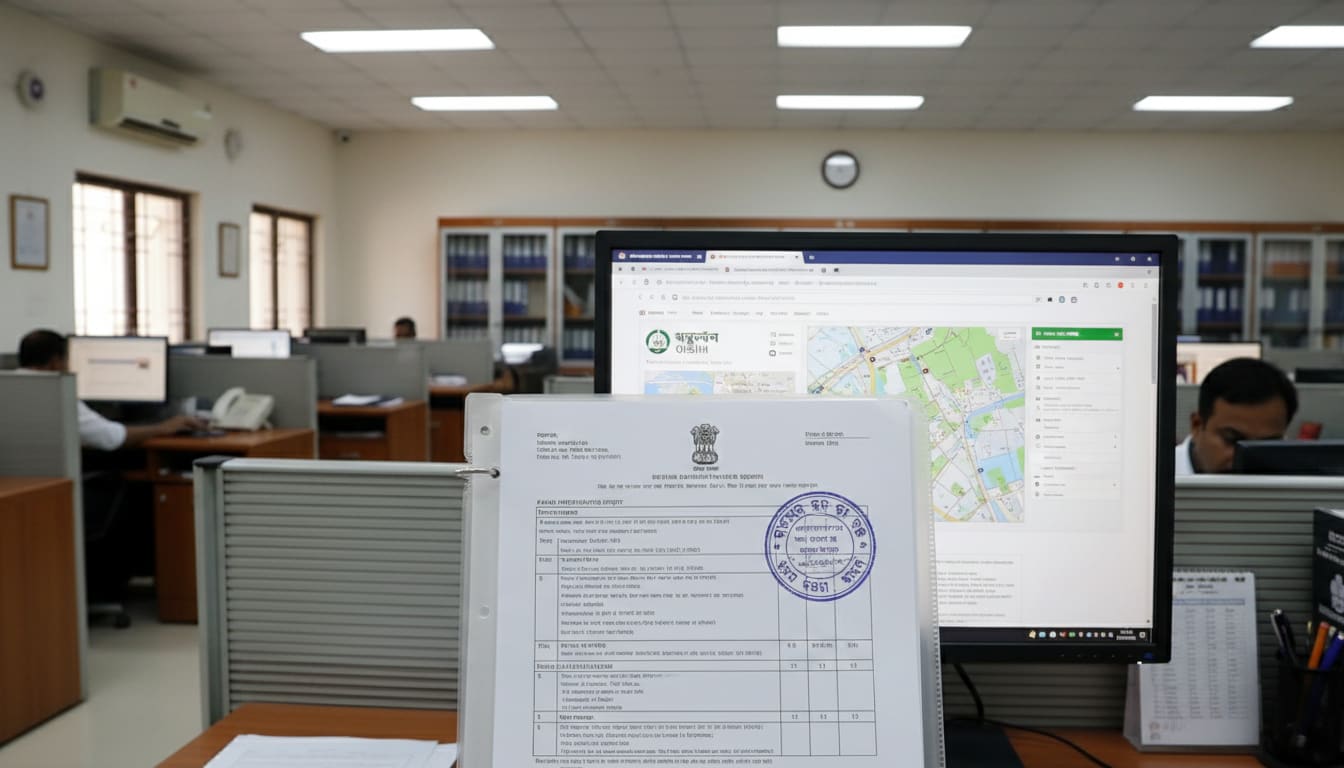
The most common mistake on this page: treating a printed Khatauni Record of Rights as the undisputed truth of ownership. In property fraud cases across South Delhi, one thing stands out. Buyers are handed flawless, officially stamped documents that are entirely fabricated. You might think a watermarked paper is safe. High resolution scanners and basic photo editing tools have made document forgery a low effort, high yield enterprise. Let me show you the exact pattern trapping first time buyers in Delhi today.
The risk is real. A single forged page can cost you your entire life savings.
What is the Khatauni Record?
The Khatauni is the primary land record document in Delhi detailing the cultivator, owner, and land classification. Issued by the Revenue Department, it must be cross verified through the DLRC portal to confirm current Bhumidhar status and ensure no unauthorized digital alterations exist.
Understanding this document is your first line of defense. In the National Capital Territory, land records have undergone massive digitization. The days of physically visiting the Patwari to view a cloth bound ledger are largely over. However, this digital transition created a new vulnerability. Brokers now download the official PDF, use basic editing software to change the owner name or plot area, and print it on high quality paper. They present this physical copy to the buyer as a certified extract.
Because the document bears the official logos and standard formatting of the Delhi government, buyers often accept it at face value. They fail to understand that a printed digital record is only valid if its contents perfectly match the live database. The Khatauni contains critical columns detailing the Khasra number, the total area in Bighas and Biswas, and the names of the recorded Bhumidhars. A single altered digit in the area column can artificially inflate the property value by tens of lakhs. You must always insist on performing a live lookup on the official Record of Rights portal rather than trusting a static paper copy.
Digital Tampering Patterns in 2026
The sophistication of forged property documents has escalated dramatically. Forgers no longer rely on fake rubber stamps. Instead, they manipulate the digital artifacts of the documents themselves.
A common pattern involves the 48 hour verification window. Fraudsters identify a legitimate property that is currently vacant. They download the genuine Khatauni and Sale Deed copies. They then alter the ownership details to match a proxy seller holding a fake Aadhaar card. The buyer is brought in, shown the property, and presented with the documents. The broker applies immense psychological pressure, claiming there are multiple other buyers ready with cash. They demand a token advance within 48 hours. This tight timeline is deliberately engineered to prevent the buyer from consulting a legal professional or securing an encumbrance certificate.
A seller might legitimately own 2 Biswas of land but alter the Khatauni to show 12 Biswas. Because the plot boundaries in unauthorized colonies or agricultural fringes are often unmarked, the buyer cannot visually verify the discrepancy. They pay for land that does not exist on paper.
How a Khasra Forgery Works
Consider an example that illustrates the mechanics of modern document tampering. A non resident Indian investor was looking to purchase a farmhouse plot on the outskirts of South Delhi. The seller presented a registered Sale Deed and a matching Khatauni showing clear title.
The documents looked immaculate. However, the seller had executed a highly specific forgery. While the Khatauni was genuine, the Khasra Girdawari, which is the harvest inspection register proving physical possession, was entirely fabricated. The seller had overlaid new dates onto an old inspection report to make it appear as though they had continuous, undisputed possession of the land. In reality, the land was embroiled in a bitter title dispute with a neighboring family.
The investor skipped the independent verification step, relying solely on the broker's assurances. They transferred the funds. Soon after the investor took possession, the actual owners filed a police complaint for trespassing. The investor suffered a total financial loss. This example highlights why verifying the chain of title requires checking multiple intersecting records, not just a single ownership certificate.
Section 17 Registration Act Mismatches
The legal framework provides clear mechanisms to spot these frauds, provided you know where to look. Section 17 of the Registration Act 1908 mandates the compulsory registration of all documents that create, declare, assign, limit, or extinguish any right, title, or interest in immovable property.
This means that any legitimate transfer of ownership in Delhi must be recorded by the Sub Registrar and logged into the Delhi Online Registration Information System. Forgers attempt to bypass this by creating fake registration receipts. They will take a genuine Sale Deed from an unrelated transaction, scan it, and replace the property details and buyer names. They keep the authentic looking Sub Registrar stamps and signatures intact.
To spot this tampering, you must take the registration number printed on the deed and run it through the DORIS portal. In a forged document, the registration number will either return no results or will pull up a completely different property transaction. Never assume a document is registered just because it has a stamp on it. The true test of validity is its presence in the central government database. You can read the exact statutory requirements in the Registration Act 1908 to understand your rights and obligations.
Delhi Land Reforms Act Section 81 Risks
Another massive area of document fraud in Delhi revolves around land use classification. Section 81 of the Delhi Land Reforms Act 1954 strictly prohibits the use of agricultural land for non agricultural purposes without proper authorization.
In areas like Chattarpur, Mehrauli, and Najafgarh, agricultural plots are frequently illegally subdivided and sold as residential parcels. To convince buyers that the land is safe to build on, fraudsters will forge the land use conversion orders. They will present a document supposedly signed by the Sub Divisional Magistrate granting permission for residential construction.
If you purchase land based on a forged conversion order, you inherit the legal liability. Under Section 81, the Revenue Assistant has the power to eject the occupant and vest the land in the Gaon Sabha. This means you lose both the property and the money you paid for it. Verifying the authenticity of a conversion order requires cross checking the diary number with the issuing SDM office. Do not rely on photocopies of government orders. Always trace the document back to its source.
The Lal Dora Exemption Exploit
To fully grasp the document fraud landscape in Delhi, you must understand the unique status of Lal Dora land. Originally demarcated in the early twentieth century, the red thread or Lal Dora separated the village habitation area from the agricultural land. Properties within this boundary are exempt from certain building bylaws and municipal regulations.
Because Lal Dora land commands a massive premium and requires less regulatory compliance for construction, forgers frequently tamper with the Khasra maps (Aks Shajra) to falsely show a plot falling within the village Abadi. They will take a plot situated hundreds of meters outside the boundary in the extended agricultural zone and digitally shift the red line on the printed map.
Buyers are lured in by the promise of hassle free construction. They pay the Lal Dora premium, only to receive demolition notices from the Municipal Corporation of Delhi months later. Spotting this requires matching the Khasra number on the Sale Deed against the official Lal Dora notification published in the Delhi Gazette. You cannot trust a standalone map provided by a broker. You must verify the coordinates with the local Patwari or through the official spatial data infrastructure.
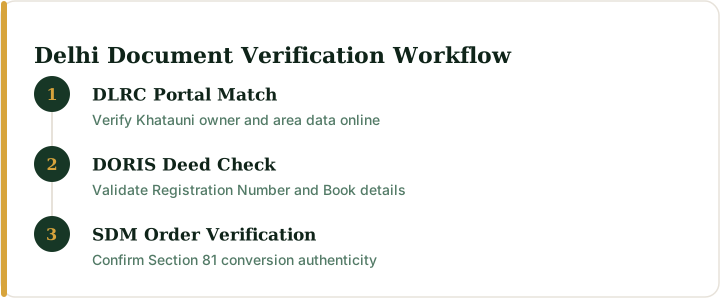
Three Step DLRC Portal Verification
You can guard against these digital tampering risks by performing a direct check on the official government systems. Follow this strict protocol before handing over any advance payment.
- Visit the official DLRC portal maintained by the Revenue Department.
- Navigate to the Khatauni search section and select the specific District, Subdivision, and Village corresponding to the property.
- Enter the Khata number or Khasra number provided by the seller to pull the live digital record, and meticulously compare the owner names, land area, and classification against the physical copy.
If there is even a single character mismatch between the printed document and the DLRC database, walk away from the deal immediately. Do not accept excuses about server errors or pending updates. The digital record is the legally binding truth.
Navigating the DORIS Portal for Deeds
While the DLRC portal handles the revenue records, the DORIS (Delhi Online Registration Information System) is your tool for verifying the actual transfer deeds. Many buyers fail to check both, leaving a massive blind spot in their due diligence.
When a seller hands you a Sale Deed, locate the registration details typically stamped on the back of the first page or printed on the final receipt. You will need the Registration Number, the Book Number, the Volume Number, and the exact Date of Registration. Go to the DORIS website and input these exact parameters into the public search interface.
The system will generate a summary of the registered document. Here is where you must be forensic in your review. Check the names of the First Party (Seller) and Second Party (Buyer). Check the exact property address and the consideration amount. Forgers often take a legitimate deed for a small 50 square yard plot and alter the paper copy to show a 500 square yard property. The DORIS database will reveal the true registered area. If the online database shows 50 square yards while your paper copy shows 500, you are holding a digitally altered forgery.
Spotting Sub Registrar Office Red Flags
Beyond the Khatauni, you must scrutinize the registered deeds. Forgers often make subtle mistakes when altering these complex documents. Pay close attention to the structural elements of the paperwork.
| Document Feature | Authentic Delhi Record | Forged Warning Sign |
|---|---|---|
| Digital Signature | Verifiable on the e-District platform | Missing, pixelated, or blurred |
| Khasra Girdawari | Matches the DLRC database history | Dates conflict with the Khatauni entries |
| Stamp Paper | NGDRS traceable serial number | Sequential numbers on non consecutive dates |
| Chain of Title | Unbroken 12 year historical sequence | Sudden unexplained transfers or missing links |
When reviewing the stamp paper, check the date of issuance against the date of execution. Forgers sometimes use old stamp papers they have hoarded, resulting in chronological inconsistencies. Additionally, look at the font rendering on the printed pages. If the names or property details appear slightly sharper or blurrier than the surrounding boilerplate text, it is a strong indicator that the PDF was edited post generation.
Final Defenses Before Payment
Your odds of falling victim to property fraud drop sharply if you enforce strict verification protocols. Never allow the seller or their broker to control the flow of information. The token money is often routed through mule accounts, making recovery nearly impossible once the funds leave your control.
Always conduct an independent 12 year search at the Sub Registrar office to verify the complete history of the plot. Do not rely on the mutation record alone, as mutation does not confer title. It merely updates the revenue records for tax collection purposes. A person can have their name in the Khatauni through a fraudulent mutation while the actual legal title belongs to someone else.
Secure a formal legal opinion from an advocate who specializes in Delhi land revenue laws. They have the experience to spot the subtle anomalies in Khasra numbering and boundary descriptions that a layperson will miss. Property investment in Delhi requires a defensive mindset. Assume every document is a forgery until you have independently proven its authenticity through official channels.
Related guide: property fraud in Delhi