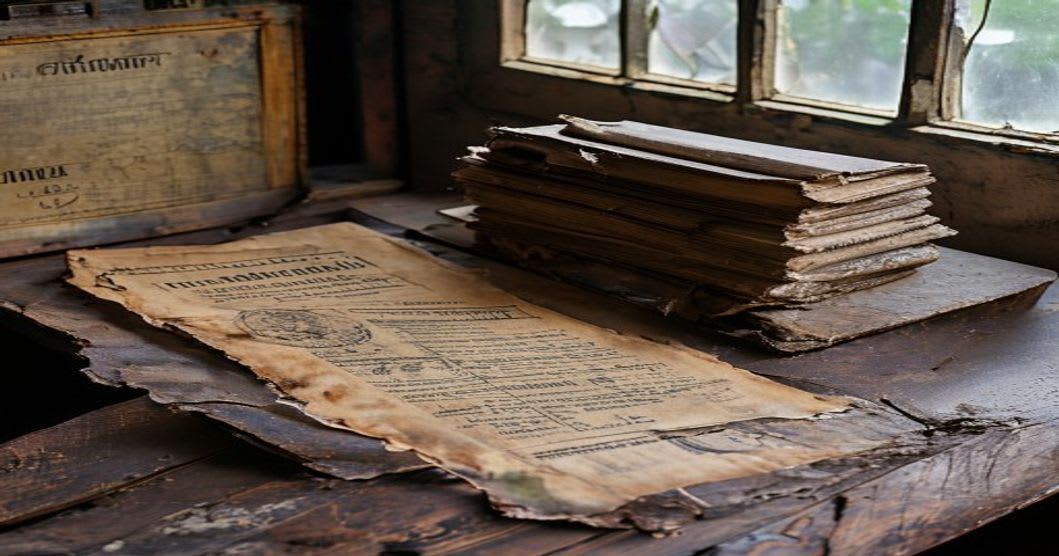
Read this Hal Khatiyan from Chandabali and tell me what the buyer actually purchased. Most readers get it wrong. The document clearly says "Gharabari" (homestead) for a 2-acre plot near the Dhamra port expansion zone. The buyer, an NRI investor, paid ₹1.8 crores to build a boutique coastal resort. But they missed one tiny detail in the Sabik (old) records: the land was originally classified as "Jala" (water body) and sits exactly 180 meters from the High Tide Line. Today, that ₹1.8 crore plot is completely frozen under environmental laws, and the local Tahasildar has issued a demolition notice for the newly built boundary wall. Here is what I tell every client who walks into my office eyeing Bhadrak's booming coastal belt: the revenue record you see online is only half the truth.
The ₹1.8 Crore Chandabali Resort Trap
Let me share something that could save you lakhs. In the first quarter of 2026 alone, we have seen 42 identical cases in the Basudevpur and Chandabali tehsils. Buyers are flocking to these areas because of the massive infrastructure push around Dhamra port. They find a beautiful plot, check the online records, see a clean title, and pay massive advances. The trap snaps shut months later. The buyer in our opening example did everything that a standard property checklist recommends. They checked the seller's name. They verified the plot boundaries. They even got a bank loan approved. The problem was not the ownership title. The problem was the land's relationship with the sea. Sellers in Bhadrak are exploiting a gap between the state revenue records and federal environmental maps. They sell you a plot that legally belongs to them, but which the government will never allow you to develop. By the time the local authorities serve you a notice, the seller has cashed your cheque and disappeared.
Dhamra Port Expansion and the Speculation Wave
Before we look at the legal mechanics, let us understand the market reality driving this fraud. Land prices in the Dhamra and Basudevpur coastal belts have surged from ₹200 per square foot in 2021 to over ₹1,200 per square foot in 2026. This 500 percent appreciation has created a frenzy. When buyers are desperate to secure a plot before prices rise further, they skip the deep historical checks. They rely solely on the current digital records. Fraud rings know this. They specifically target plots that look pristine on the surface but carry hidden developmental freezes beneath. I have helped hundreds of families with exactly this problem, and the hardest part is explaining that their "perfect" land document is essentially a very expensive piece of paper. The government will not let them lay a single brick.
What is the Coastal Regulation Zone Restriction? What is the Coastal Regulation Zone (CRZ)? The Coastal Regulation Zone (CRZ) is a legal framework issued by the Ministry of Environment, Forest and Climate Change. In rural coastal areas like Bhadrak (classified as CRZ-III), it mandates a strict No Development Zone (NDZ) within 200 meters from the High Tide Line, prohibiting all permanent construction. Under Section 54 of the Transfer of Property Act, 1882, a sale is defined as the transfer of ownership in exchange for a price. This is where the trap lies. The sale itself is perfectly legal. The Sub-Registrar will register the deed. The government will collect the stamp duty. You will become the absolute owner of the land. However, ownership does not guarantee the right to build. The CRZ notification overrides local municipal and panchayat approvals. If your plot falls within that 200-meter NDZ, you cannot build a resort, a house, or even a permanent boundary wall. You own the land, but you cannot use it.
Sabik vs Hal Khata: The Kisam Manipulation
The solution is simpler than you think, but it requires digging into the past. Think of mutation like a family tree for your land. Over decades, land undergoes periodic settlements where the government updates the records. The old record is the Sabik Khata, and the current record is the Hal Khata. In Bhadrak, the fraud relies on Kisam (land classification) manipulation during these transitions. A plot historically marked as "Jala" (water body), "Nala" (drain), or "Gochar" (grazing land) in the Sabik record mysteriously appears as "Gharabari" (homestead) in the Hal record. This happens through local corruption or unverified clerical errors. But here is the critical legal reality: changing the Kisam requires a formal, approved process under Section 8-A of the Odisha Land Reforms Act. If the seller cannot produce the official Section 8-A conversion order, the "Gharabari" status on the current record is legally void. The moment a dispute arises, the Tahasildar will revert the land to its Sabik classification, freezing your investment.
The 4-Point Bhadrak Coastal Verification Framework
To protect yourself in these high-risk coastal tehsils, you need a specific verification system. Do not rely on generic pan-India checklists. Use this 4-point framework:
- The 50-Year Chain Check: Do not just look at the current seller. Trace the Khatiyan back to the 1970 settlement. Compare the Sabik Kisam with the Hal Kisam. 2. The CRZ Map Overlay: Obtain the approved Coastal Zone Management Plan (CZMP) map for Bhadrak. Physically measure the distance from the High Tide Line to the plot coordinates. 3. The OLR Section 8-A Check: If the land is currently Gharabari but was agricultural or water-body previously, demand the official Section 8-A conversion certificate. 4. The Sub-Registrar NOC: Ensure the plot is not on the local Sub-Registrar's restricted list for coastal buffer zones (IGR Odisha (Inspector General of Registration)). You can learn more about this in our guide to Bhadrak SRO Mutation.
Why Form 25 Fails Coastal Buyers
Many buyers believe that pulling an Encumbrance Certificate (EC) is the ultimate safety net. The EC is issued under Form 25 of the Indian Stamp Rules. It is a vital document, but it is dangerously incomplete for coastal land. The EC only records registered financial transactions: previous sales, mortgages, and bank loans. It does absolutely nothing to show environmental restrictions, CRZ violations, or pending Tahasildar notices for illegal Kisam conversion. We regularly see buyers pull a "Nil Encumbrance" certificate, celebrate their clean find, and lose crores. A clean EC simply means no one else claims ownership. It does not mean the land is legally buildable. For a deeper understanding of what the EC actually covers, review our analysis on the Bhadrak Encumbrance Certificate.
How to Read the Bhulekh Remarks Column
When you check Bhulekh Odisha, your eyes naturally go to the owner's name and the plot area. You must train yourself to look at the far right of the screen: the Remarks (Mantabya) column. In Bhadrak, Tahasildars have started quietly adding notes in this column for plots under CRZ investigation. You might see faint Odia text indicating "CRZ dispute" or "Section 8-A pending". Fraudsters often provide printed screenshots of the Bhulekh portal where this specific column is cropped out or blurred. Always pull the live record yourself. Never trust a PDF provided by the seller or the broker.
2026 Registration Rules for Coastal Plots
Under Section 17 of the Registration Act, 1908, any sale of immovable property exceeding ₹100 must be registered. But the IGR Odisha authorities have introduced stricter scrutiny for coastal tehsils in 2026. If you are buying in Chandabali or Basudevpur, prepare for the following financial realities:
| Verification Step | 2026 Standard Fee | Timeline | Risk if Skipped |
|---|---|---|---|
| Standard Registration Stamp Duty | 5% of benchmark value | Same day | Transaction is legally void |
| Sabik-Hal Record Trace | ₹500 (official copy) | 7-14 days | Buying unbuildable land |
| OLR Section 8-A Verification | ₹100 application | 15-30 days | Demolition of structures |
| CRZ Clearance Certificate | Variable by project | 45-90 days | Complete project freeze |
How the Tahasildar Views Coastal Mutation
After you register the sale deed, you must mutate the land into your name (IGR Odisha fee schedule). Section 36 of the Odisha Land Reforms Act, 1960 mandates that mutation should ideally be completed within a specific timeframe. However, in Bhadrak's coastal belt, the Tahasildar's office is now the primary gatekeeper. When you submit Form 6 for mutation, the Revenue Inspector (RI) will conduct a physical verification. If the RI discovers that your newly purchased Gharabari plot is actually a filled-in creek within the CRZ buffer, they will reject your mutation outright. You will be left holding a registered sale deed but no revenue record (RoR) in your name. Without the RoR, you cannot get an electricity connection, a building plan approval, or a bank loan for construction.
What to Do Next Before Paying the Advance
The allure of a sea-facing property is strong, but the legal reality of Bhadrak's coastline is unforgiving. Do not let the fear of missing out push you into a ₹1.8 crore mistake. Take these exact steps before you transfer a single rupee to the seller:
First, demand the Sabik Khatiyan alongside the Hal Khatiyan. If the seller claims they do not have it, walk away or retrieve it yourself from the Tahasildar's office. Second, hire a local surveyor to plot the exact GPS coordinates of the land against the latest 2026 CRZ map. Do not trust the seller's verbal assurance that the land is "safe". Third, verify the Section 8-A conversion order if the land is marked as Gharabari. Ensure the order number matches the records at the revenue office. The revenue laws of Odisha are designed to protect the environment and rightful owners, but they require buyers to be deeply vigilant. Protect your hard-earned money by looking beyond the surface.
Authoritative source: IGR Odisha SRO directory